
.webp)
Pattamundai, Aug 13: As Independence Day approaches, a quiet but powerful expression of patriotism is taking shape in rural Odisha—not through rallies or social media campaigns, but through the hands of young women stitching the National Flag.
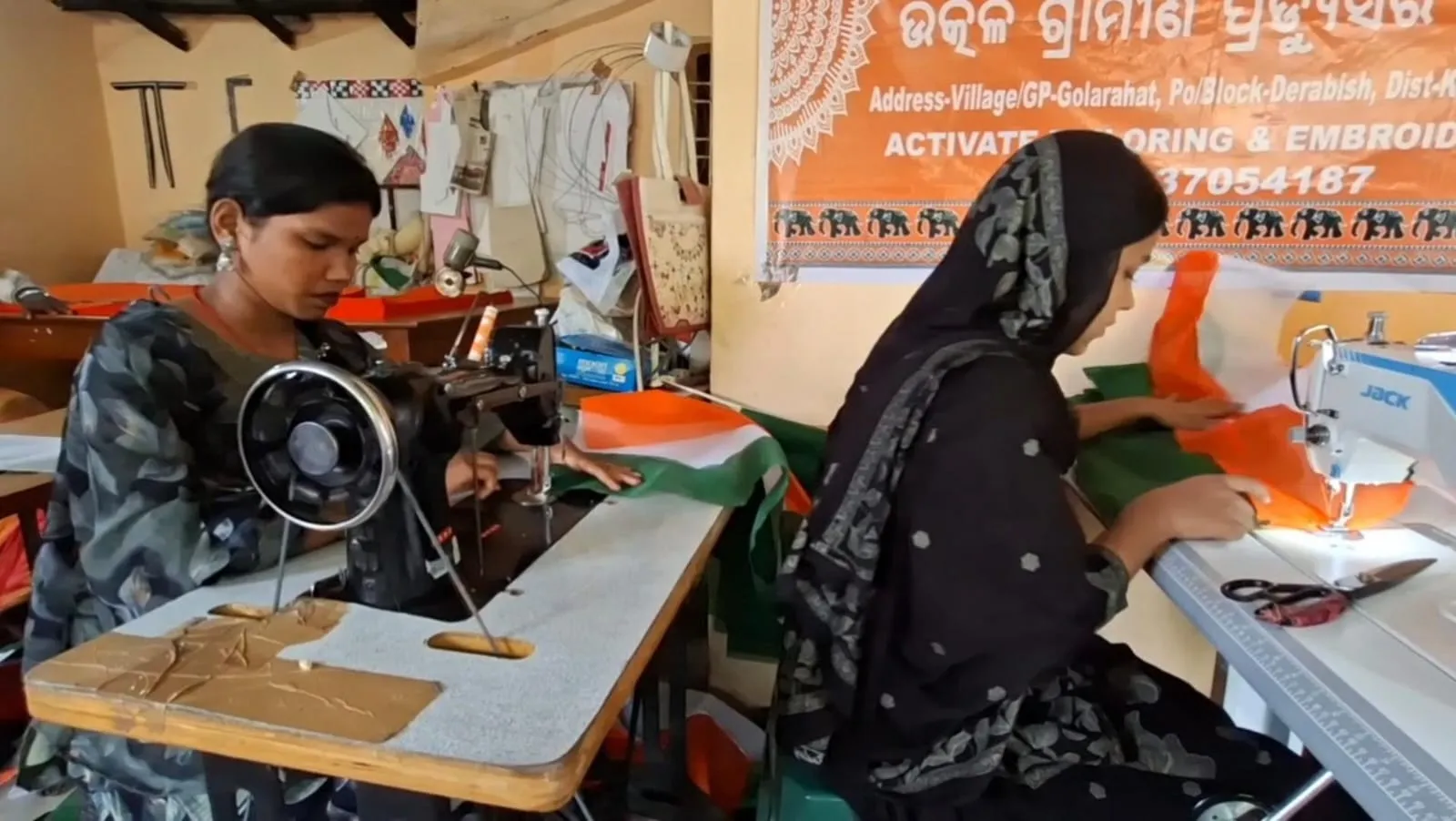
At Golrahat village in Derabish block of Kendrapara district, a group of young women is balancing college studies, household responsibilities and skilled work while producing thousands of Tricolours ahead of August 15.
For these young women, patriotism is simple: love the country, respect its national symbols and contribute through meaningful work.
The village-based producer group has 72 members, including 25 women aged between 18 and 29. Around 12 of them are pursuing higher education. They attend college and practical classes before reporting to the production centre, where they cut, stitch, finish, clean and pack the flags.
Among them is Liza Malik, a first-year undergraduate student at Derabish College, who has been associated with the group for nearly two years.
“We cut the cloth according to the required measurements, stitch the three colours together, print the Ashoka Chakra and then finish and pack the flags,” Liza said.
The flag-making season began on July 27 this year. The young women are now working intensively to complete orders before Independence Day. Once the flag production ends, the group plans to take up school uniform production.
From college classrooms to sewing machines
For Liza, the work has also changed the way she uses social media.
“After coming to the production centre, my mobile phone usage reduces considerably. There is always work to do,” she said.
She believes social media can be useful when used constructively—to showcase skills, promote products, connect with customers and create opportunities.
The work is also helping the young women become financially independent. According to Liza, members involved in seasonal flag production can earn around ₹7,000 to ₹8,000, depending on the volume of work.
Eighteen-year-old Nafisa Naz, a Chemistry Honours student, follows a similar routine. After attending classes and practical sessions, she returns home for lunch before heading to the production centre.
“We produce around 100 to 200 flags a day,” Nafisa said.
She added that specialised training is not necessary for flag production. Those familiar with basic stitching or sewing machines can quickly learn the process.
A different face of Gen Z
Gen Z is often portrayed through the lens of smartphones, social media, online activism and street protests. But the young women of Golrahat present a different picture—one that combines education, employment, self-reliance and civic responsibility.
Nafisa believes young people should think carefully before following online trends.
“Social media can benefit us when used wisely. If we misuse it, we are the ones who suffer,” she said.
She also stressed the importance of education and financial independence, arguing that young people should work towards better career opportunities while developing respect for the country.
Patriotism beyond slogans
Musarat Jahan Akhtari, who leads the group of 25 young flag-makers, said the initiative was designed to help young people use their time productively alongside their studies.
“With young people spending so much time on social media, we felt they could devote some of that time to meaningful work, earn money and meet some of their own expenses,” she said.
The group uses saffron, white and green fabric to make the flags. The pieces are cut and stitched according to standard measurements, with the Ashoka Chakra printed before the flags are cleaned, finished and packed.
The work, Musarat believes, provides more than income. It gives young women confidence, skills and a sense of responsibility.
She urged young people to step outside the constant noise of social media and focus on building their own future.
A Tricolour message from rural Odisha
In Golrahat, patriotism has become part of the daily routine. Young women move from classrooms to sewing machines, transforming pieces of fabric into the Tricolour that will be carried across Kendrapara and beyond on Independence Day.
Their message is not against activism or dissent. Instead, they believe that raising one's voice, pursuing education, earning independently and contributing to society can all coexist with patriotism.
As India prepares to celebrate Independence Day, these young women from Kendrapara offer a different definition of nationalism not loud slogans, but skilled hands, self-reliance, education and responsibility towards the nation.
.webp)